
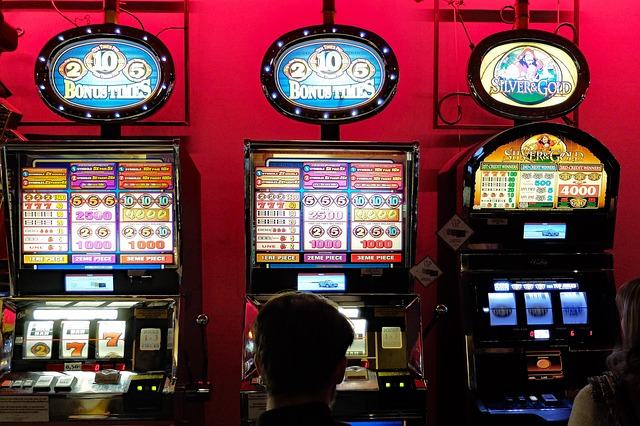
The Dhaka tech bubble has finally burst into the gambling sector, trading repetitive slot spins for genuine digital mastery. In 2026, Bangladesh’s youth are pivoting away from mindless chance, demanding platforms where quick reflexes and strategic depth dictate the payout. As high-speed internet penetrates rural districts, the local appetite for competitive, skill-centric wagering has turned the traditional “luck-only” model into a relic of the past, favoring games where your brain determines the ultimate victory.
The death of the “one-armed bandit”: why 2026 is the point of no return
The neon-lit monopoly of pure chance has officially cracked in the face of the “Generation Z” takeover. For years, the Dhaka tech scene watched as global gambling trends shifted, but 2026 marks the moment when Bangladesh’s players stopped being passive observers of a spinning reel. Today’s gamers grew up on high-stakes mobile combat and strategy titles, making the old-school “click and pray” mechanics feel insultingly simple.
From RNG to raw talent: the mechanics of the new era
The transition from Random Number Generators (RNG) to skill-based mechanics (SBG) is fundamentally rewriting the code of digital entertainment. In this new landscape, your Return to Player (RTP) it’s a dynamic variable controlled by your reaction time, memory, and tactical foresight. This shift is perfectly captured by platforms like Glory casino, which has successfully integrated competitive leaderboards and skill-indexed rewards into the local market. By offering a logical bridge between traditional betting and professional gaming, such platforms have captured a demographic that previously viewed gambling as a waste of cognitive potential.
The move toward skill-centric gaming is fueled by several regional and technical pillars:
- The massive penetration of 5G across Bangladesh, allowing for the low-latency inputs required for high-speed skill games.
- A cultural shift where gaming is viewed as a legitimate meritocracy rather than a vice of the idle.
- Transparency in blockchain-verified results, ensuring that “skill” isn’t just a marketing buzzword but a measurable metric.
- The rise of “Shooter-Betting” and “Puzzle-Wagering,” where clearing levels directly multiplies the initial stake.
The psychology of control: why “watching” is no longer enough
Psychologists have long discussed the “illusion of control,” but in 2026, that illusion has been weaponized into a product. In a classic slot, you are a spectator to your own bankroll’s demise. In a skill-based environment, you are the protagonist. This changes the hormonal payout of every session. Instead of the jagged anxiety of a random spin, players experience a sustained dopamine flow born from agency. Winning because you executed a perfect sequence of moves provides a psychological “high” that pure luck can never replicate.
To keep this engagement loop tight, developers have introduced sophisticated reward architectures:
- Dynamic difficulty adjustment that keeps players in a state of “flow” without being too easy or impossibly hard.
- Social prestige systems where high-ranking players earn unique skins and digital status symbols visible to the entire community.
- Skill-based “boss fights” where a group of players can pool stakes to take down a high-value digital target for a shared jackpot.
- Achievement-based unlocking of higher-stake rooms, ensuring that only “qualified” players can access the biggest pots.
This structural evolution has turned solitary gambling into a communal, competitive sport. It’s no longer just about the money; it’s about where you stand in the regional rankings.
Beyond the reels: the genres dominating the 2026 market
Today’s top-grossing titles in the Bangladeshi digital space look more like Call of Duty or Candy Crush than anything found in a 20th-century casino. We are seeing “Fish Hunter” games where players use paid ammunition to harpoon high-value targets, and “Crash Games” that require a pilot’s nerves to cash out milliseconds before a disaster. Even racing simulators have entered the fray, where your ability to take a corner at the perfect apex determines if you take the prize pool or go home empty-handed.
The diversification of genres has birthed entirely new categories of wagering:
- Hybrid eSports betting where players can bet on their own performance in real-time 1v1 matches.
- Logical “Grid-Battlers” that reward mathematical speed and pattern recognition under extreme time pressure.
- Narrative-driven RPG gambles where player choices throughout a story dictate the final payout multiplier.
- Tactical “Tower Defense” wagering where the efficiency of your layout saves your digital treasury from depletion.
The cold hard data: the economics of skill vs. chance
The numbers coming out of early 2026 are staggering. Average session times for skill-based games are 70% longer than traditional slots in the South Asian market. Players aren’t just “burning” through a budget; they are investing time to improve. For operators, this means a lower house edge per individual bet, but a massive increase in Lifetime Value (LTV) and player retention. In Bangladesh specifically, the turnover from skill-integrated platforms has outpaced traditional RNG-only sites for the first time this year.
The profile of the 2026 gamer is a sharp departure from the past:
- Primarily aged 18-34, with a background in competitive mobile gaming and a preference for interactive content.
- A tendency to deposit smaller amounts more frequently, treating the platform as a daily entertainment hub rather than a one-off “hit.”
- High engagement with social features, such as chat rooms and “clans,” which drive community-based betting.
- A demand for “Instant-Withdraw” features, reflecting the fast-paced nature of the gameplay itself.
The dark side of mastery: can the pros break the house?
While skill significantly moves the needle, these games are built on “Skill-influenced” math, not “Skill-only” outcomes. Your talent might push the RTP from a baseline of 96% to a staggering 99.2%, but the house’s structural advantage remains in the form of entry fees or slight mathematical offsets. It’s a win-win: the player feels the power of their expertise, and the platform enjoys a steady, predictable flow of volume.
To maintain this delicate balance, operators have deployed advanced defensive tech:
- AI-driven “Skill-Matching” algorithms that ensure pros play against pros, preventing “sharks” from clearing out novice pools.
- Anti-bot heuristics that detect non-human reaction times and instantly freeze suspicious accounts.
- Variable loot tables that ensure even the most skilled player faces an element of the unknown to keep the “gamble” alive.
- Macro-detection systems that prevent players from using third-party software to automate perfect gameplay sequences.
Skill-based gaming is the only path forward in a world where attention is the scarcest currency and the “house” must finally respect the player’s intelligence.