
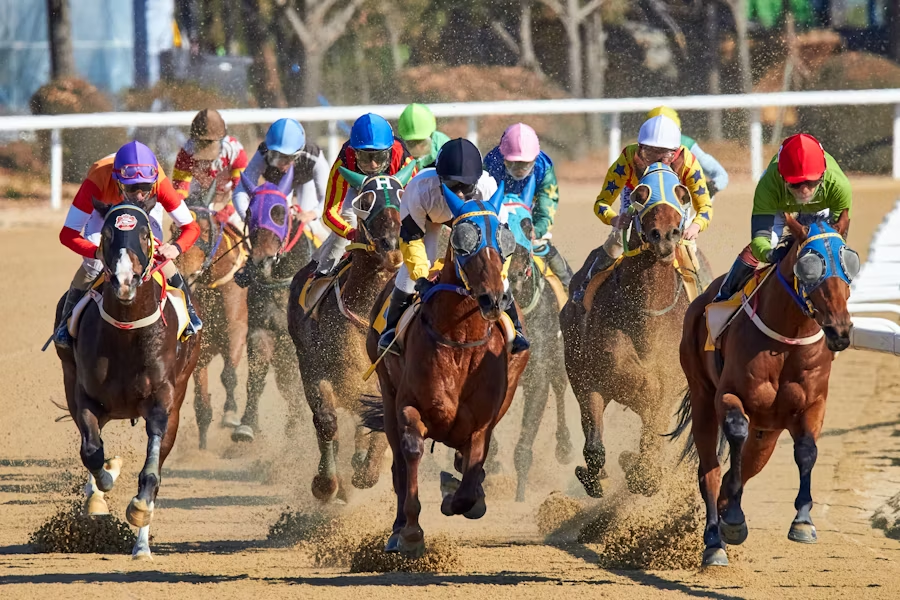
Esports fans are used to breaking games down to their smallest details. Recent form. Performance trends. Matchups that favor one style over another. Horse racing operates on the same analytical wavelength, even if the setting looks very different.
Each race is its own contest, shaped by data, preparation, and subtle strategic decisions. The challenge isn’t learning everything at once; it’s knowing which information actually matters. Once the key terms and statistics click, reading a race card starts to feel less like guesswork and more like studying a competitive slate.
Core Horse Racing Terms You’ll See on Every Card
Before diving into deeper analysis, it helps to understand the basic language used across race cards and broadcasts. These terms appear constantly, and knowing them keeps you focused on the data rather than decoding jargon.
Key terms to know before reading a card:
- Win, Place, Show: Straightforward outcomes based on finishing position,
- Exotic wagers: Bets involving multiple horses or races, such as Exactas or Trifectas,
- Box: A way to cover multiple finishing orders within an exotic wager,
- Scratch: A horse removed from the race before post time, with wagers refunded.
Much like esports formats and tournament rules, these concepts become intuitive once you see them in action. After a few races, the terminology fades into the background, and the analysis takes center stage.
The Stats That Actually Drive Performance
Horse racing produces an enormous amount of data, but only a few metrics consistently explain results. For analytically minded fans, these numbers form the backbone of race evaluation. Together, these metrics help separate meaningful patterns from noise and give structure to race analysis.
Speed Figures: The Baseline Metric
Speed figures condense a horse’s performance into a single number adjusted for distance and track conditions, making results comparable across venues.
An 85 at one track is intended to equal an 85 elsewhere, creating a universal performance benchmark. Horses that repeatedly post strong figures often show a higher level of consistency over time.
Past Performances as Competitive History
Past performances, often called PPs, serve as a horse’s stat profile, summarizing recent races, speed figures, surfaces, and distances.
Recent results tend to matter most, especially when they come under conditions similar to today’s race. Consistency becomes clear quickly, with some horses delivering reliable figures while others fluctuate from start to start.
Jockey and Trainer Impact
The jockey and trainer combination functions much like player-coach synergy. Certain pairings consistently outperform expectations, especially at specific tracks or under certain conditions.
Strong connections don’t guarantee results, but they often signal preparation and intent. Over time, these patterns become easier to spot and factor into broader analysis.
How to Read a Race Card Without Getting Overwhelmed
A race card brings all this information together, and it’s easy to feel overloaded at first. A structured approach keeps things manageable. Breaking the process into repeatable steps helps turn complexity into clarity.
Start by scanning the field’s recent speed figures. Horses repeatedly near the top of the range deserve attention. Next, check whether those performances came at the same distance and surface as today’s race. Proven form under matching conditions matters more than raw reputation.
Connections add context, but pace ties everything together. Visualizing how the race might unfold often reveals more than any single stat. Some races favor early speed. Others reward late runners who benefit from a fast early tempo.
Many fans like to compare their own reads with professional breakdowns, especially at major venues. As an example, pages like FanDuel horse racing picks for Gulfstream Park show how analysts weigh speed figures, pace scenarios, and recent form when evaluating a race card.
Pace Scenarios and the “Style Matchup” Factor
Pace analysis is where horse racing feels most like esports strategy. Every horse has a preferred running style. Understanding how those styles interact often determines how the race unfolds.
Front-runners push early, setting the tempo. Closers conserve energy and make their move late. When several front-runners clash, they can tire each other out, opening the door for a late surge from behind.
Track conditions add another layer. Some tracks favor inside positions. Others play fairer to late runners. These tendencies function like map characteristics, subtly influencing outcomes without guaranteeing them.
Understanding pace helps explain surprising finishes. A horse didn’t necessarily underperform; the race may have unfolded against its strengths. Context often matters as much as raw performance.
A Simple Framework for Newcomers
Early on, progress comes from focusing on a few repeatable ideas rather than trying to master everything. Consistency in approach matters more than trying to cover every angle.
A few habits help build confidence early on:
- Prioritize speed figures and recent form,
- Pay attention to surface and distance history,
- Watch how pace affects similar races on the same card,
- Review replays to connect numbers with visuals.
If you want a general overview of how wagers themselves are structured, Keeneland’s guide on the basics of betting offers a clear explanation without diving too deep. It’s a useful reference for understanding mechanics without overwhelming detail.
A Different Arena, the Same Mindset
Horse racing rewards patience and pattern recognition. The more races you watch, the more context the data gains. Numbers stop feeling abstract. Replays confirm or challenge assumptions. Trends emerge over time. That gradual clarity is part of what keeps analytically minded fans engaged.
For esports fans who enjoy the process as much as the outcome, that depth is part of the appeal. Each card becomes a puzzle, each race another chance to refine your read.
Understanding how and why things happen turns watching horse racing into a genuinely engaging analytical experience, one that feels surprisingly familiar once you know where to look.